There is a sentiment often attributed to Clement Greenberg, who was an art critic and historian best known for his advocacy of abstract expressionism and artists like Jackson Pollock and Barnett Newman nearly a century ago. I’m unsure if he actually said it, as it goes against much of the popular mythos of the man, but it’s such an excellent place to begin when considering artworks (and by extension how art is both the most direct and most subversive form of history) that I often cite it anyway.
This sentiment – or idea – is that we use the criteria we have, now, in evaluating art and artworks, but we do this knowing that the criteria can and must change, as we change, and society and the larger conversations about art and history change.
This is a good place to stand – as a point of beginning – when considering the exhibition We Are Digital. I must also offer the caveat that besides being a curator and arts journalist / critic, I have also created and exhibited artworks using digital media (which is a wide and contrasting variety of forms under a large umbrella), cutting my teeth in DOS based systems and later exhibiting across Canada a number of digital prints that intersected with photography, so this arena is not a new one for me, but one I return to with excitement and interest to experience what a new generation of artists will do, in this fertile space.
The exhibition statement : Traditional digital art is not a trend. It is a craft, a discipline, and a living art form, and it deserves its place in the fine art world. Poetic Tiger Gallery is honored to announce “We Are Digital”, a groundbreaking exhibition in partnership with the Modern Digital Collective, dedicated to championing the artists who have always been here.
The works I share below are Dreamweaver by Farnoosh Aryan, Naiads by Harepo and The Harbinger of Dusk by Faybel.
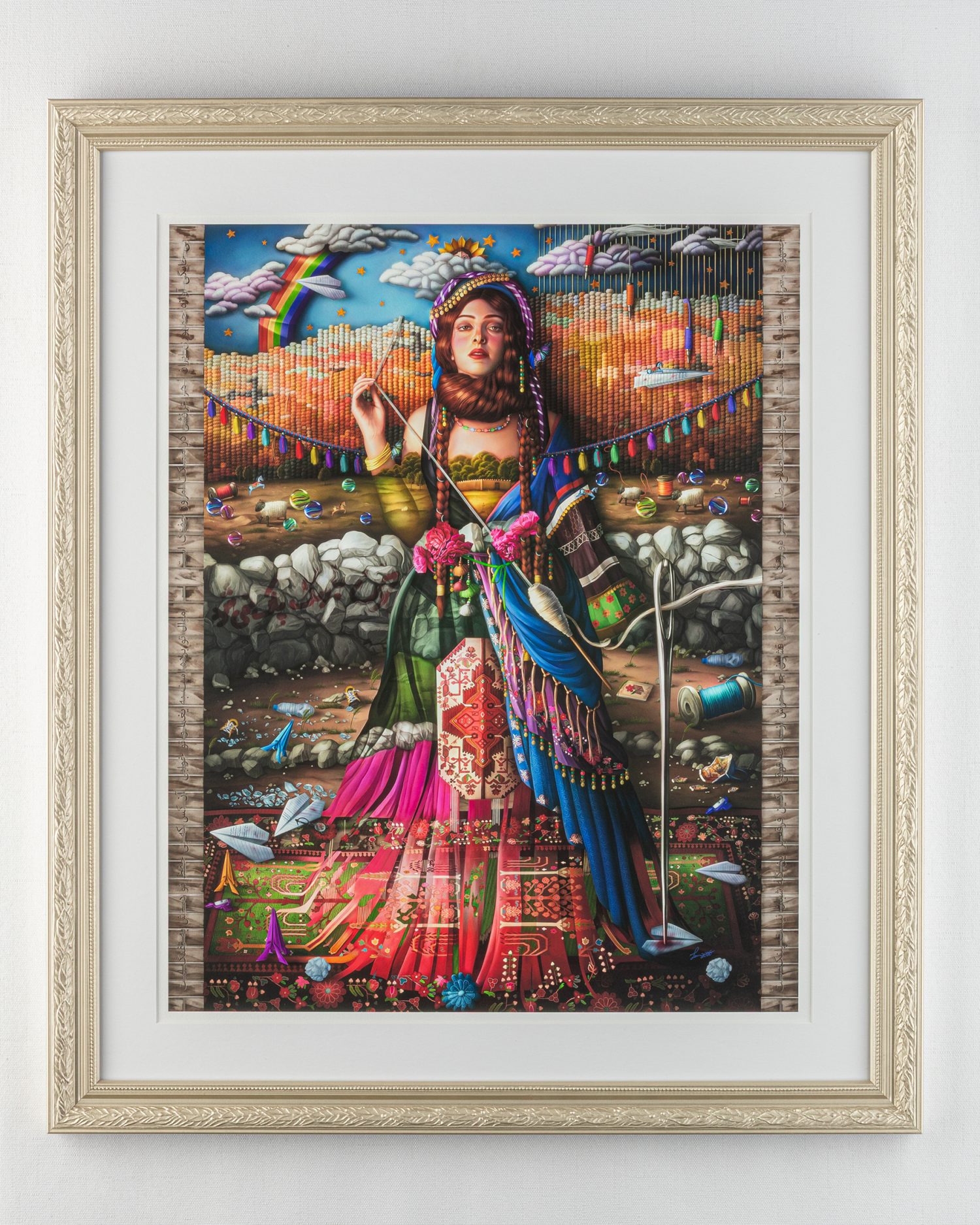
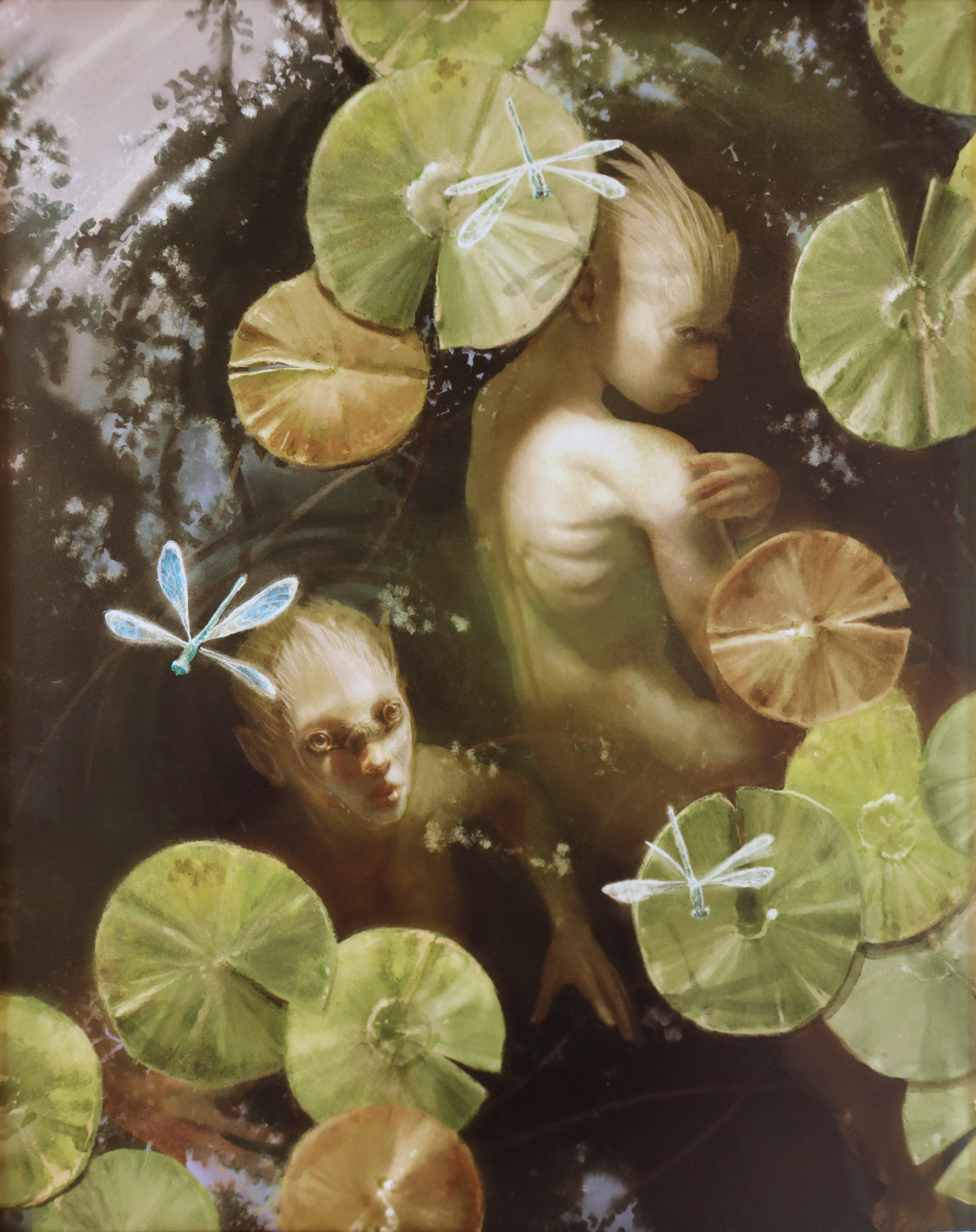
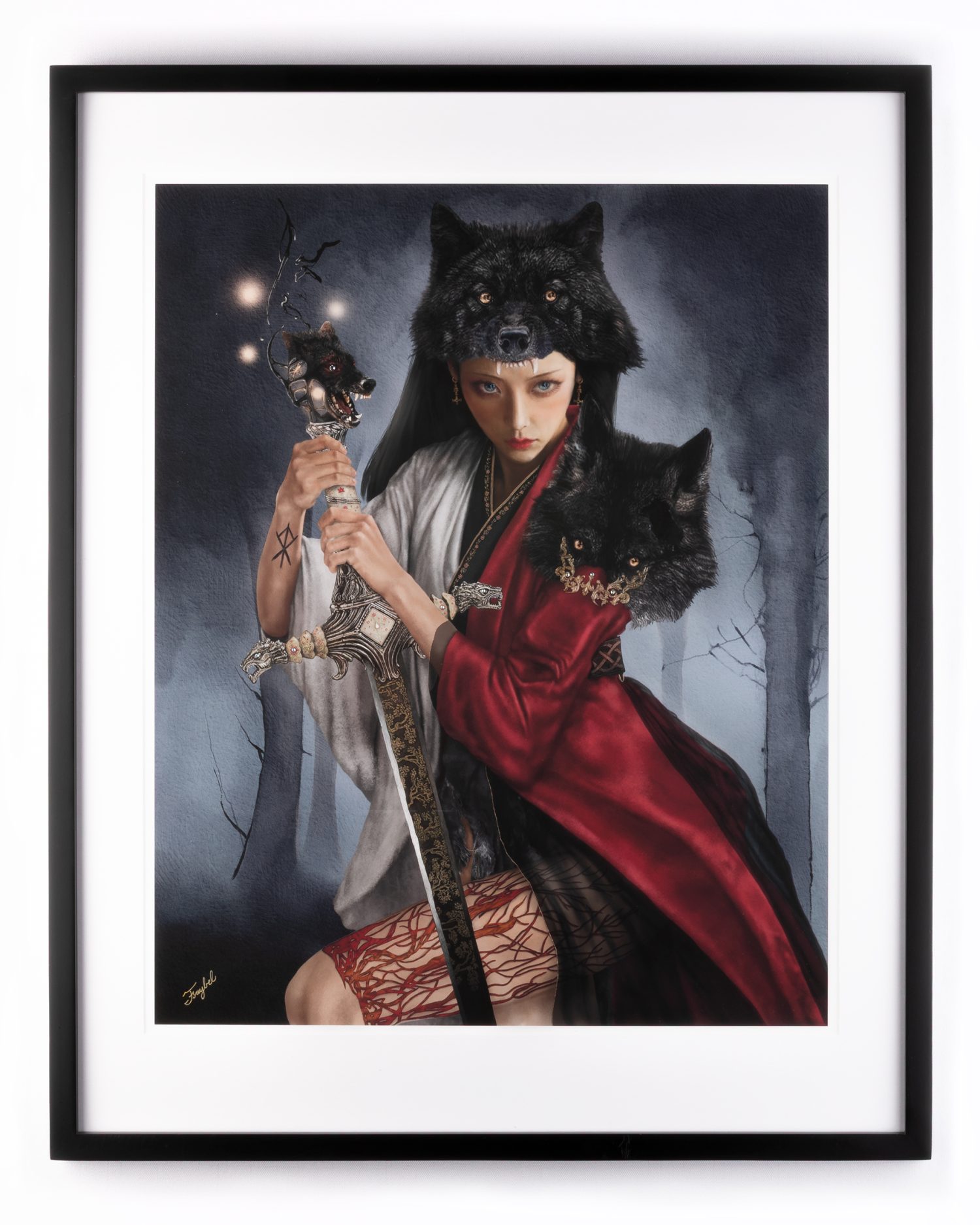
Many of the works are perhaps more appropriately termed mixed media, but they come to their final realization in the digital sphere. This speaks both to the skill and discipline of the artists, but also to how the term ‘digital’ itself is like other innovations in artmaking that don’t so much mark a fracture from previous art media but build upon it (I say this because I myself did not go from photography to digital, as many assume happens, but from traditional stone lithography to digital, which brought a different sensibility to digital, just as someone who draws or paints finds tools within the digital sphere that correspond to their own interests).
There is more that unites these artists than media : many of the works are figurative, but also allude to a narrative, as though they’re scenes from larger stories. A quality of fantasy or fairy tales seems to inform many of the artworks, too, but I apply this loosely, and dance from the Grimm brothers to Edgar Allen Poe to contemporary fantasy and science fiction as a place to stand when enjoying the vignettes presented by the artists in We Are Digital. In a more art historical tone, the works of fantasists like Moreau, surrealists like de Chirico or Dalí and the illustrations of Beardsley or Rackham (often for stories by the aforementioned Poe) are another consideration when engaging with these artists.
The works below are Forgot How To Fly by Dead Seagull, Guilt by Sara Lee and Samara’s Sacred Flame by Kate Laird.
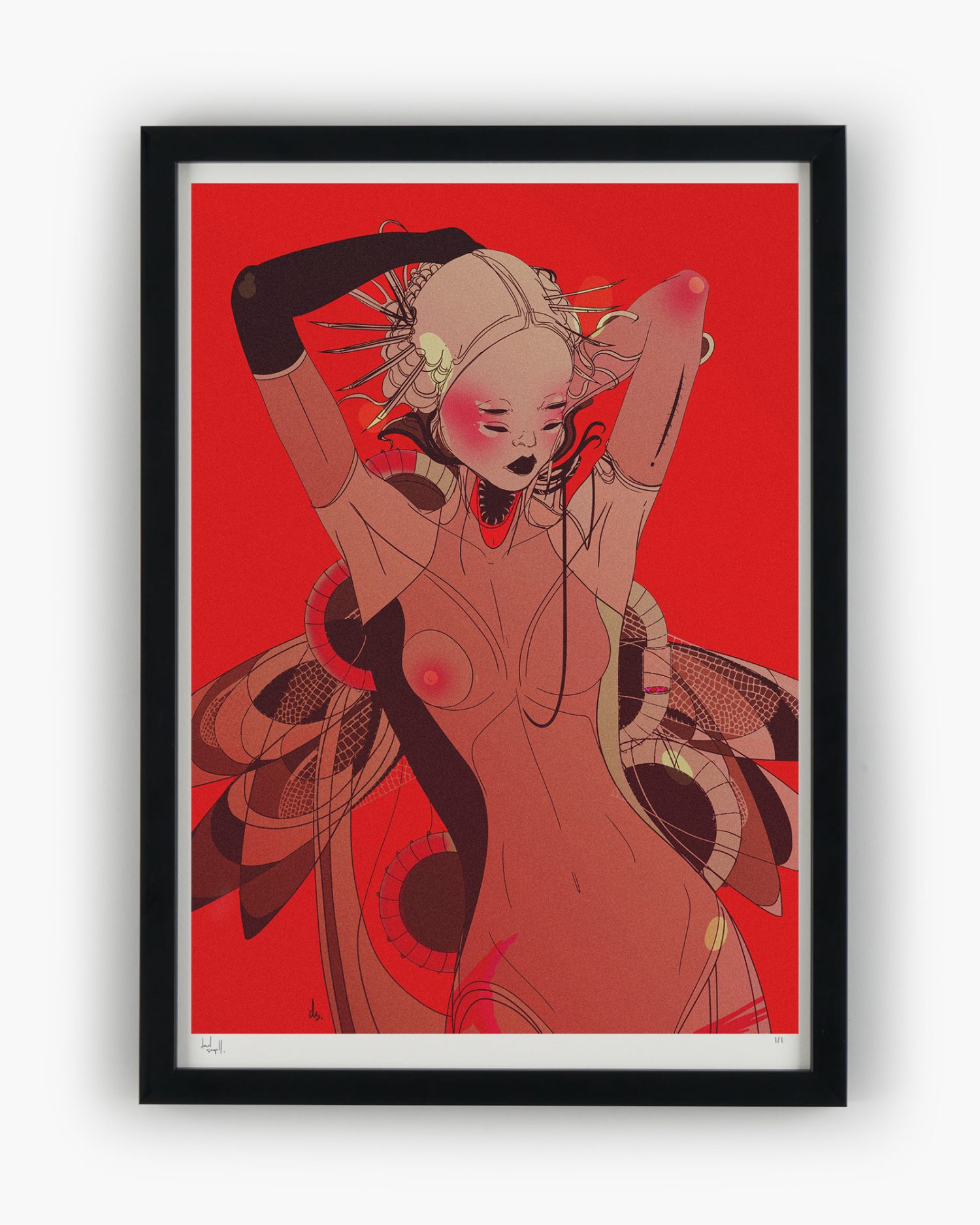
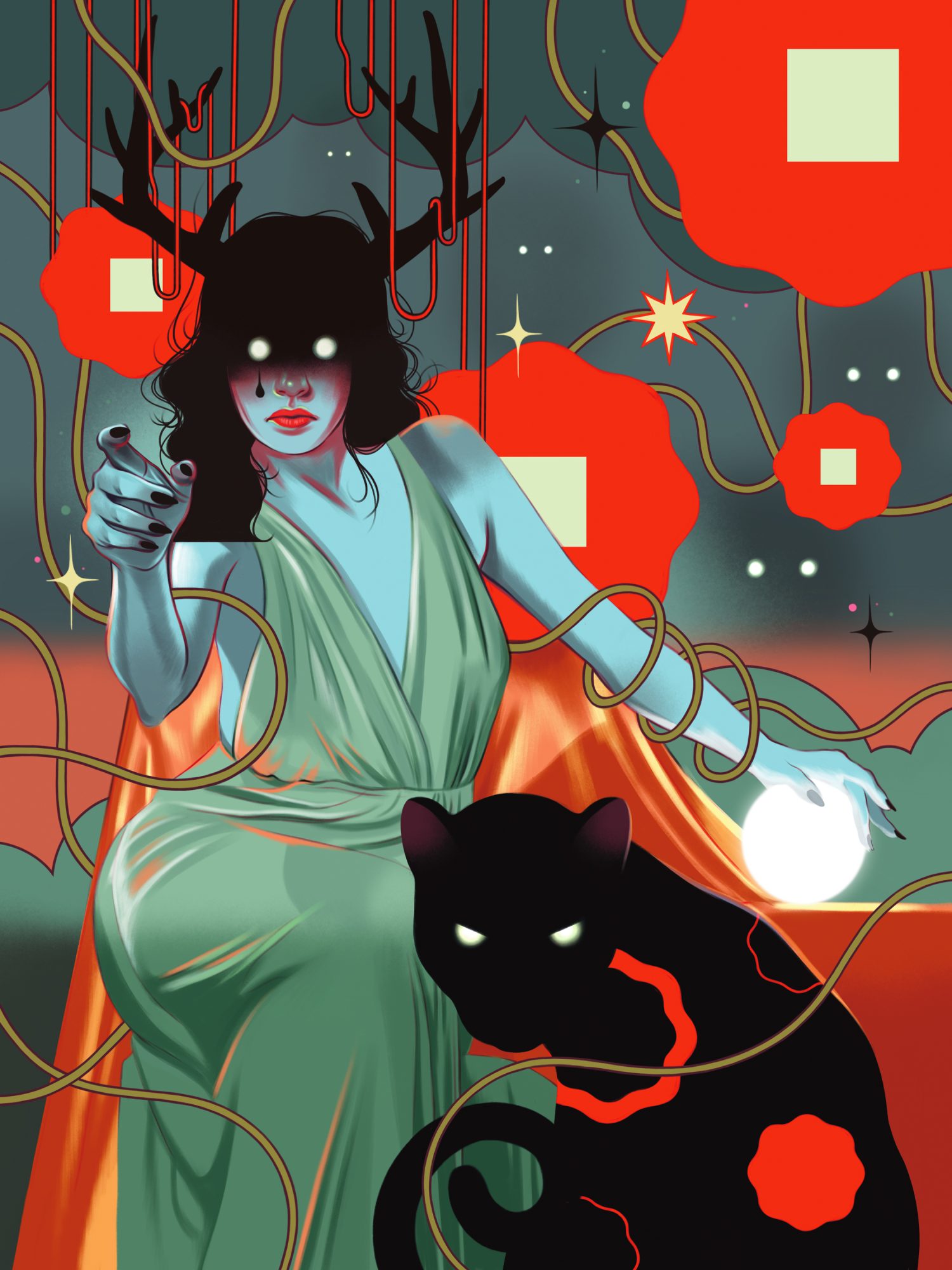
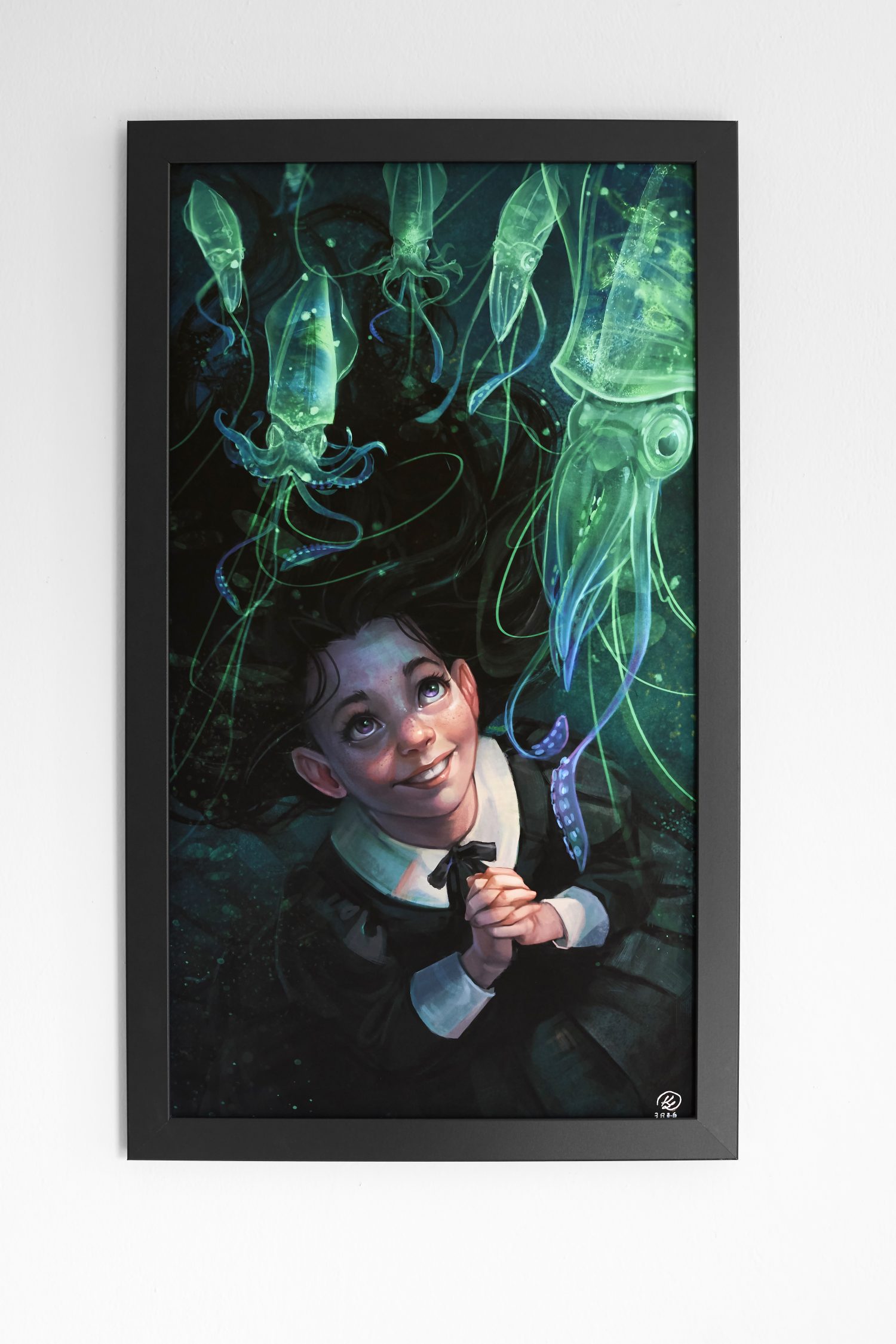
More about the exhibition – and about the participating artists – can be seen here.
The exhibition is on view from September 18 to October 7, 2026. When you visit the site, I encourage you to fall into a rabbit hole, exploring the many artists that are part of this collective. They are as diverse as they are prolific, and will offer you a very enjoyable education into how a specific common point – of digital art – can be realized in a variety of engaging and different ways.
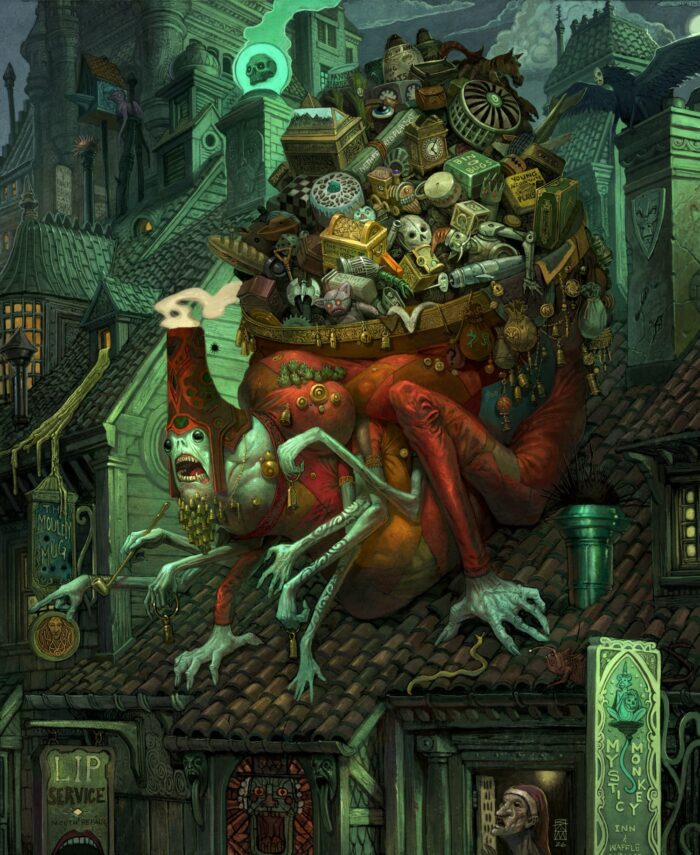
The header image for this article is The Kringleshnook by Sean A. Murray.